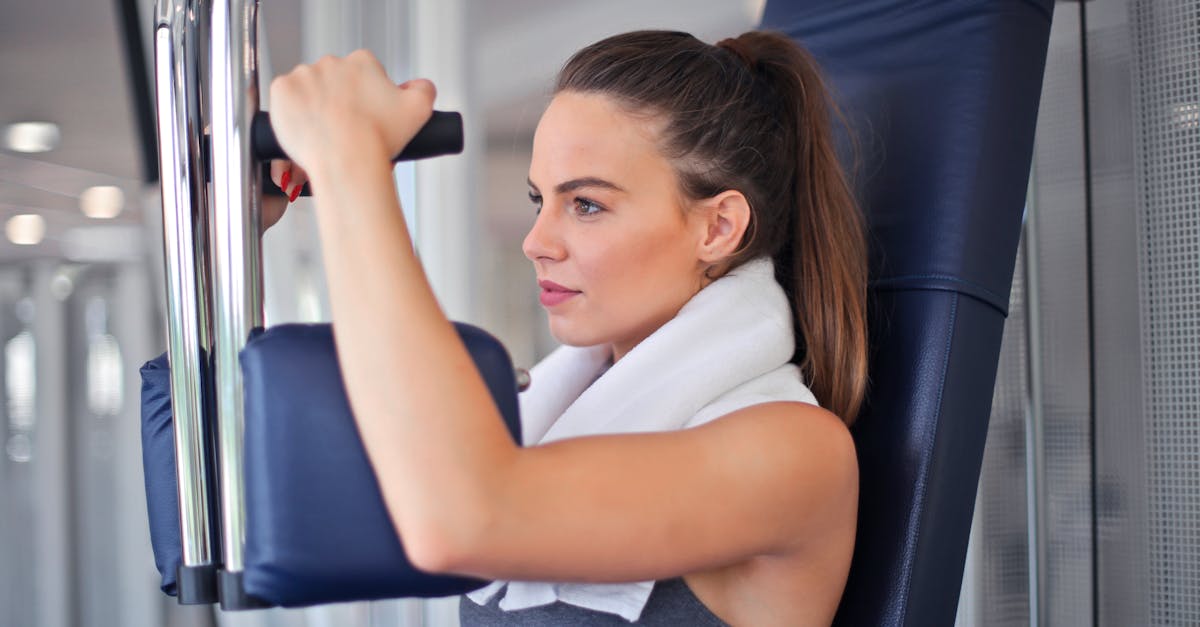
Why Your 'Passive' Exercise Machine Fails Most People (And What Actually Builds Lasting Fitness)
You bought it with the best intentions. Maybe it was that under-desk elliptical promising to keep you active while you work, or the vibrating platform that swore it would tone your muscles without a single squat. The promise of a ‘passive’ exercise machine is alluring: fitness gains with minimal effort, seamlessly integrated into your busy life. But if you’re like most people I’ve coached, these machines quickly become expensive clothes racks or dusty reminders of failed resolutions. You use them for a week or two, feel a faint hum of activity, then abandon them when no real change occurs.
I’ve seen countless clients fall into this trap. They invest in a gadget that promises a shortcut, only to realize that true fitness isn’t about magical vibrations or gentle rotations. It’s about engagement, challenge, and consistency. In my experience, these passive devices fail because they fundamentally misunderstand how our bodies adapt and grow stronger. They offer a placebo of activity, leading to disappointment and often, a deeper cynicism about fitness itself. What changed everything for me and my clients was recognizing that intentional discomfort – the kind that comes from genuinely challenging your body – is not a barrier, but the very mechanism of progress. Without it, you’re just moving, not growing.
Key Takeaways
- Passive exercise machines offer insufficient stimulus for meaningful physiological adaptation or calorie expenditure.
- True fitness gains require progressive overload, consistently challenging your body beyond its current capacity.
- Integrate short, intense bursts of functional movement into your day for superior results compared to passive devices.
- Shift your mindset from ‘effortless’ fitness to embracing intentional, measurable effort for sustainable progress.
The Low-Intensity Trap: Why Minimal Effort Yields Minimal Results
Let’s be brutally honest: your body is an incredible machine designed for efficiency. It only adapts when it absolutely has to. Passive exercise machines, by design, offer an extremely low level of stimulus. Take the popular under-desk elliptical. While it keeps your legs moving, the resistance is often negligible, and the range of motion limited. Your heart rate might barely nudge above resting, and your muscles aren’t challenged to the point of micro-tears necessary for growth and adaptation.
Think about it in terms of calories. A quick Google search might tell you that an under-desk elliptical burns around 100-150 calories per hour. That sounds okay, until you compare it to a brisk 30-minute walk (around 150-200 calories) or a 15-minute high-intensity interval training (HIIT) session (200-300+ calories, even accounting for EPOC – excess post-exercise oxygen consumption). The caloric output from these machines is so low that any perceived benefit is often outweighed by even a single extra snack. A small handful of almonds can easily negate an hour of ‘passive’ effort. The mistake I see most often is that people equate any movement with effective movement. It’s not just about moving; it’s about moving with purpose and intensity that pushes your physiological boundaries. If your body isn’t working hard enough to necessitate repair and growth, it simply won’t change.
The Illusion of Toning: Why Vibrations Don’t Build Strength
Vibration plates, once lauded as a ‘future of fitness’ gimmick, are another prime example of passive machines failing to deliver. The science behind whole-body vibration (WBV) does show some potential benefits in specific, highly controlled contexts – often for bone density in astronauts or therapeutic settings for elderly individuals with severe mobility issues. However, the commercial machines sold for ‘toning’ and weight loss rarely, if ever, replicate the intensity, frequency, and amplitude required for these specific physiological responses. They’re designed to feel like they’re doing something, often creating an uncomfortable jiggle that people mistakenly associate with muscle activation.
Real muscle growth, or hypertrophy, occurs when muscles are subjected to progressive overload. This means you need to consistently lift heavier weights, perform more repetitions, or increase the time under tension to the point of muscular fatigue and micro-damage. This micro-damage then triggers a repair process, making your muscles stronger and slightly larger. A vibration plate, no matter how powerful, cannot replicate the mechanical tension and metabolic stress required for significant strength gains or aesthetic ‘toning’ for the average, healthy individual. You might feel a fleeting activation, but without genuine resistance and controlled movement, your body isn’t fooled into adapting. My own experience with clients who tried these machines confirmed it: they felt ‘activated’ for a moment, but their actual strength, endurance, and body composition remained stubbornly unchanged.
Missing the Mental-Physical Connection: The Core of Sustainable Habits
One of the most overlooked reasons passive exercise machines fail is their disconnect from the mental game of fitness. Sustainable fitness isn’t just about the physical act; it’s about cultivating discipline, self-efficacy, and a genuine enjoyment of challenging your body. When you’re simply standing on a vibrating plate or gently pedaling an under-desk elliptical, you’re not engaging in the mindful effort that builds these crucial mental muscles.
Consider the difference: when you commit to a challenging workout, whether it’s lifting weights, running, or a demanding yoga session, you’re actively choosing discomfort. You push through mental barriers, learn to listen to your body, and experience the satisfaction of overcoming a challenge. This process builds resilience, reinforces positive self-talk, and creates a virtuous cycle where effort leads to reward, which fuels more effort. Passive machines, conversely, encourage a mindset of minimal effort, promising something for nothing. When the ‘nothing’ inevitably yields no tangible results, it erodes motivation and reinforces the belief that exercise is too hard or ineffective, rather than teaching the vital lesson that effort itself is the pathway to results. What changed everything for me was realizing that the mental grit built during a tough workout is just as important as the physical benefits, if not more so, for long-term adherence.
The True Cost of ‘Convenience’: Wasted Time and Money
The appeal of passive exercise machines often hinges on convenience. The idea of getting fit while watching TV, working, or reading sounds like a dream come true for busy individuals. However, this perceived convenience often translates to inefficient use of time and a significant financial drain. These machines can range from a few hundred to several thousand dollars, representing a substantial investment for something that delivers negligible returns.
Let’s break down the opportunity cost. That $500 you spent on a passive elliptical could have funded:
- One year of a gym membership: Access to a variety of equipment, classes, and often professional guidance.
- Several months of personal training sessions: Tailored, effective workouts with accountability.
- High-quality resistance bands and dumbbells: Versatile tools for effective home workouts that genuinely challenge your muscles.
- A new pair of running shoes and weather-appropriate gear: Enabling enjoyable outdoor activities that burn real calories and build endurance.
Beyond the money, consider the time. An hour spent passively ‘exercising’ on a machine that doesn’t elevate your heart rate or challenge your muscles significantly is an hour not spent on genuinely effective movement. In my experience, even 15-20 minutes of intentional, focused activity – like bodyweight circuits, brisk walking with inclines, or a short jog – yields dramatically better physical and mental benefits than hours on a passive device. The true convenience isn’t about avoiding effort; it’s about maximizing the impact of your limited time through intelligent, purposeful movement.
What Actually Works: Embracing Intentional Movement and Progressive Overload
So, if passive machines are a dead end, what’s the path to lasting fitness? It’s far less glamorous but infinitely more effective: intentional movement and progressive overload. This doesn’t mean you need to dedicate hours to the gym, but it does mean being honest about the effort required.
Here’s a strategic approach that actually works:
Prioritize Functional Movement: Instead of isolating small, gentle motions, focus on movements your body is designed for: squatting, lunging, pushing, pulling, carrying, and hinging. These engage multiple muscle groups and translate directly to real-world strength and mobility.
Embrace Short, Intense Bursts: You don’t need an hour. A 10-15 minute circuit of bodyweight exercises (squats, push-ups, planks, lunges) performed with intent and reaching muscular fatigue will yield far greater results than an hour of passive pedaling. Aim for 3-5 of these mini-workouts per week.
Implement Progressive Overload (Even with Bodyweight): This is the golden rule of fitness. Once 10 squats are easy, do 12. Once 12 are easy, try single-leg squats, or add a small weight (a heavy book, a backpack). For cardio, walk faster, add an incline, or try short bursts of jogging. Always seek to slightly exceed what you did last time. This consistent challenge is what forces your body to adapt.
Integrate Active Recovery: Instead of passive machines, use your lunch break for a brisk 20-minute walk outside. Take the stairs. Park further away. These small, active choices add up to significant calorie expenditure and cardiovascular health over time, without the false promises of passive devices.
Focus on Form Over Speed: It’s better to do 5 perfect squats that deeply engage your muscles than 20 sloppy ones. Watch videos, use a mirror, or get a quick form check from a fitness professional. Proper form prevents injury and ensures your effort is actually targeting the right muscles.
This approach isn’t always easy – it requires commitment and embracing a degree of discomfort – but it’s the only way to build fitness that truly lasts. My own journey, and that of countless clients, has shown that consistent, intentional effort, however small, always trumps the illusion of effortless activity.
Frequently Asked Questions
Q: Can passive exercise machines help with weight loss at all?
A: While any movement burns some calories, the caloric expenditure from passive exercise machines is typically very low – often less than a brisk walk. For meaningful weight loss, you need a caloric deficit, which is best achieved through a combination of consistent, moderate-to-high intensity exercise and dietary changes. Relying solely on passive machines for weight loss is largely ineffective.
Q: Are there any benefits to using a vibration plate?
A: In highly specific, controlled scientific or therapeutic settings (e.g., for bone density in astronauts or specific rehabilitation), whole-body vibration can show benefits. However, the commercial vibration plates marketed for general fitness and ‘toning’ for the average person rarely provide the intensity, frequency, or amplitude necessary to replicate these benefits. For most healthy individuals, they do not contribute to significant strength gains, muscle toning, or weight loss.
Q: How can I fit effective exercise into a busy workday without passive machines?
A: Focus on short, high-impact bursts. Try a 10-15 minute bodyweight circuit (squats, lunges, push-ups, planks) during a break. Take brisk 20-minute walks at lunch. Use stairs instead of elevators. Set a timer to stand and stretch every 30 minutes. These small, intentional movements, performed with effort, add up quickly and are far more effective than prolonged passive activity.
Q: What’s the biggest mistake people make when trying to get fit at home?
A: The biggest mistake is expecting results without genuine effort or progressive overload. Many people start with home workouts but don’t increase the challenge as they get stronger. To see lasting change, you must continually challenge your muscles and cardiovascular system beyond their current capacity, even if it’s just adding a few more reps, slowing down the movement, or introducing a harder variation of an exercise.
Q: Is light activity, like using a passive machine, better than nothing?
A: Yes, any movement is generally better than being completely sedentary. However, it’s crucial to understand the limited benefits of passive machines compared to intentional, effortful exercise. If your goal is true fitness, strength, or significant weight loss, passive machines will likely lead to disappointment. They can be a supplemental tool for breaking up long periods of sitting, but not a primary fitness strategy.
Ultimately, building lasting fitness isn’t about finding the easiest path, but the most effective one. Embrace the challenge, be consistent, and watch your body and mind transform. Stop looking for shortcuts that disappoint and start trusting in the power of your own intentional effort.
Written by Samuel 'Sam' Rivers
Wellness & Habits
Sam is a former behavioral science researcher with a knack for translating complex concepts into actionable habits.
You Might Also Like

I Tracked My Morning Coffee for a Month: What My Sleep Revealed
I tracked my morning coffee intake for a month, uncovering unexpected connections to my sleep quality and energy. Here's what changed everything.
Six Months Without a Smart Toothbrush: My Dental Health Revelation
After using a smart toothbrush for years, I switched back to a basic electric model. My dental health insights were unexpected.

5 Ways Your Home Humidifier Is Costing You Health and Money
Discover the non-obvious ways your humidifier might be costing you health and money, and what to do instead for optimal indoor air quality.